Services

How we build sites
that compete

Design, build, write, and optimize.
In that order, from scratch.

01

Development

Next.js or HTML/CSS/JS

Your custom site is built from scratch, never assembled from plugins and templates.

Faster pages, cleaner code, better search performance over time.

Performance is a ranking signal

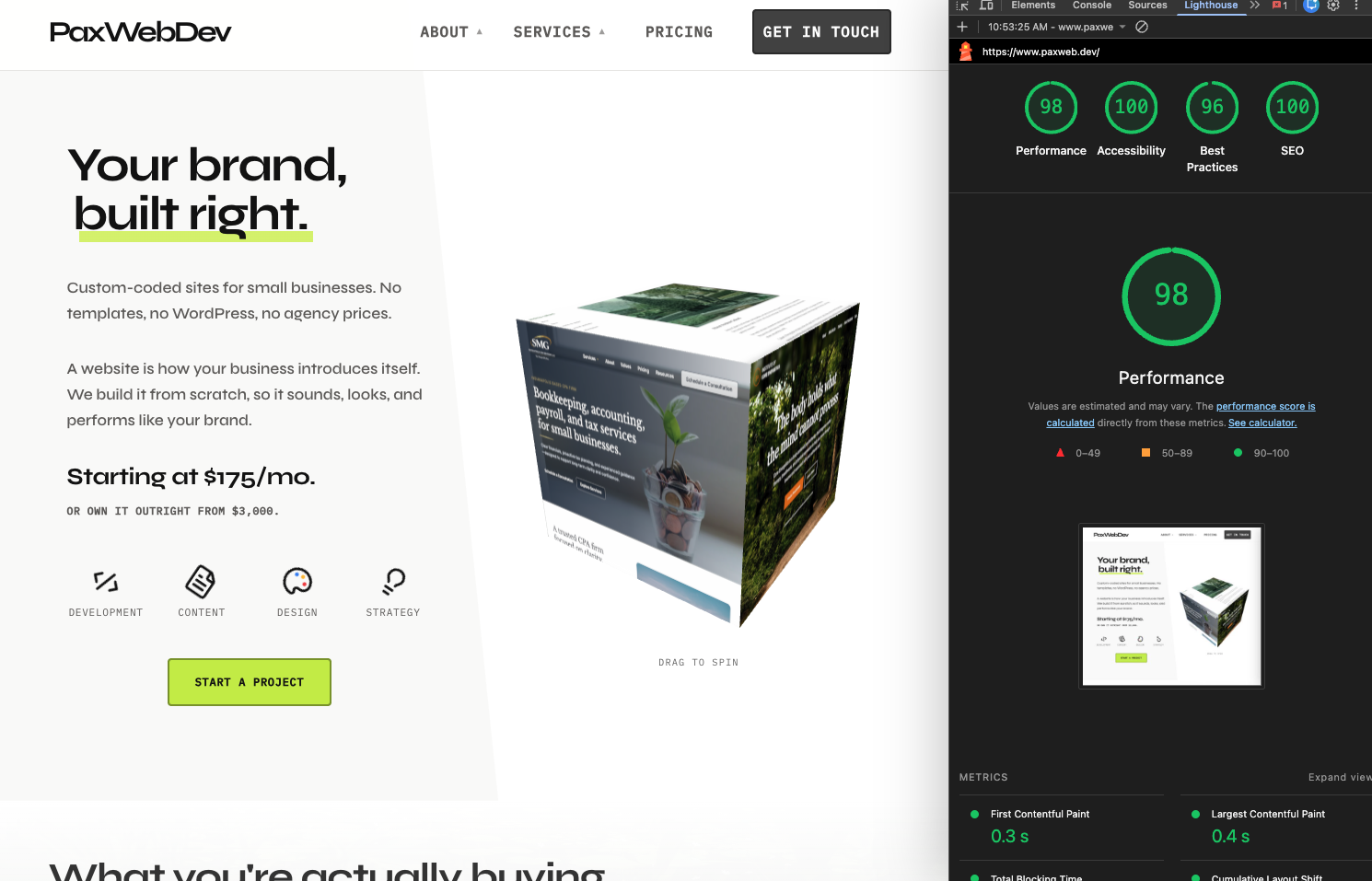
Google doesn't just evaluate keywords. It measures how a site feels: speed, responsiveness, and layout stability. Sites that load fast and behave predictably keep people engaged. That improves conversions, and it improves rankings.

Proof

Core Web Vitals

Lighthouse results showing high performance, accessibility, best practices, and SEO scores

Strong Core Web Vitals reduce bounce, improve usability, and support SEO.

Built, not assembled

Platforms like WordPress and Wix are built for speed of setup — not performance. They rely on layers of plugins, themes, and page builders.

  • Plugin stacks grow → updates and compatibility issues
  • Security surface expands → widely targeted ecosystems
  • Page builders bloat → extra code slows real users

Custom builds remove these layers entirely. No plugin treadmill. No mystery dependencies.

How we choose the stack

  • Next.js for structured, scalable sites
  • Plain HTML/CSS/JS when simplicity is the goal

What you get

  • Hosted on Vercel or Netlify (global CDN + SSL)
  • Core Web Vitals optimized from day one
  • Mobile responsive + accessible
  • No plugin maintenance cycles
  • Your site isn't tied to a platform — it can run anywhere.
02

Content

CMS + copywriting

Most marketing sites collapse into the same frictionless, optimized nothing. Fast to generate, easy to ignore.

The details that make a business feel real — the voice, the specificity, the proof that actual humans built this thing — get smoothed away.

Human texture — the voice of your brand — is what's left when that doesn't happen.

Surface area

For a local business, every project page, every service page, and every blog post is another way to get found. The goal isn't a beautiful five-page site. It's a site that keeps growing and keeps earning.

Whale Creek's website started as five static pages. Now it has 25 project pages and counting, each indexed with its own title, photos, location, and materials.

  • Before: 5 static pages
  • After: 5 pages + 25 projects (and growing)
  • That's 25 more entry points for "Indianapolis deck builder," specific neighborhoods, material types, and project-specific searches. Five pages earn you a web presence. Thirty gets you traffic.

Example

Project page
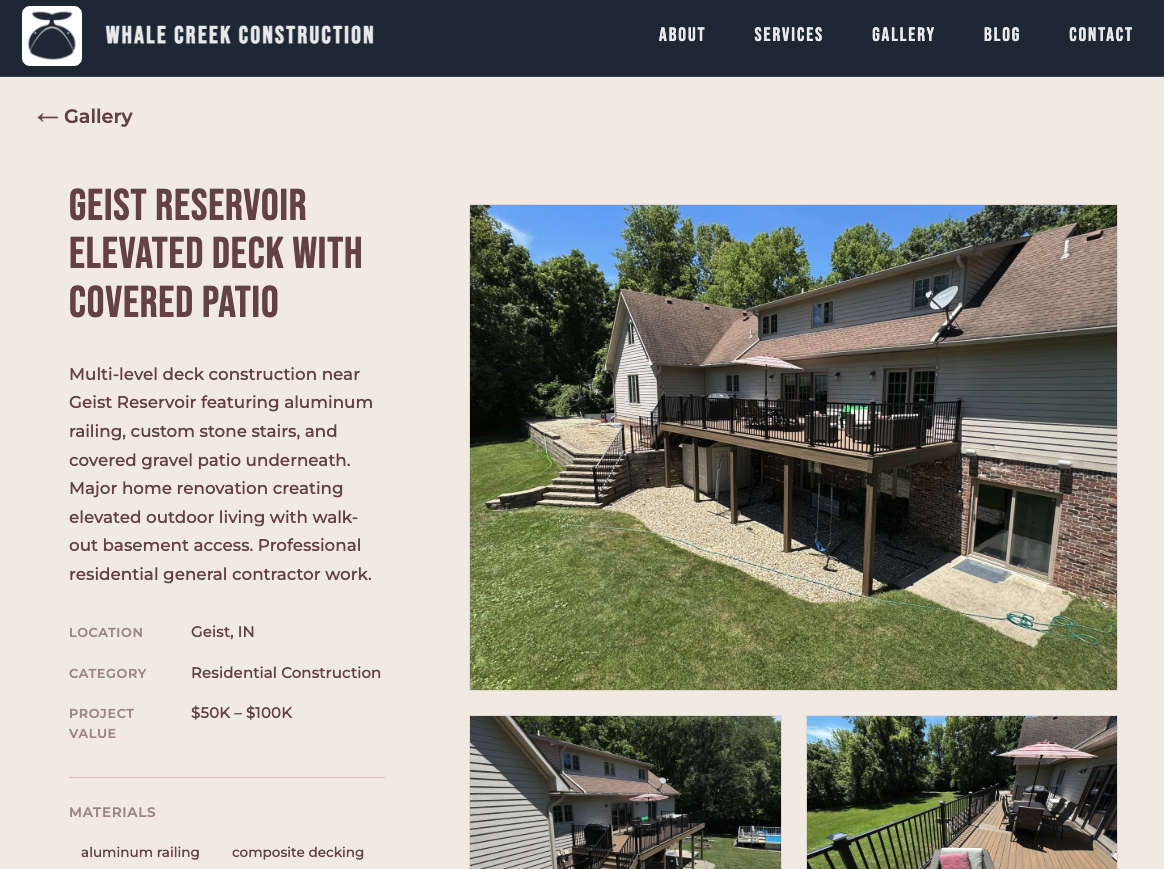
Whale Creek Construction project page showing title, description, location, category, project value, materials, and photo gallery

Why we use Sanity

Content only works if the system behind it holds. Sanity keeps everything structured as it grows: projects, categories, locations, alt text, drafts vs. published. No plugin stack. Nothing quietly breaking.

It's infrastructure that supports the human texture — not a replacement for it.

Example

Workflow
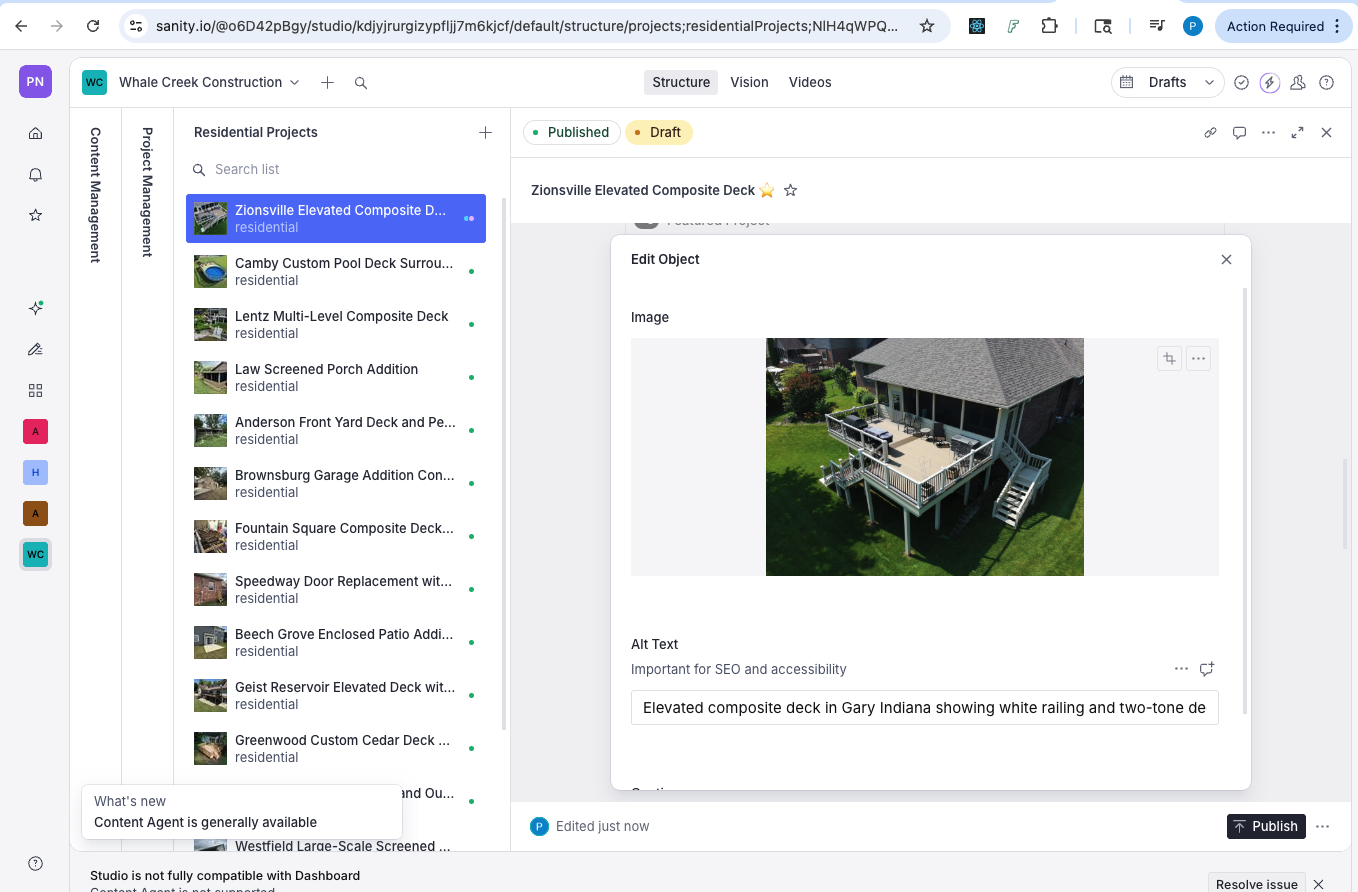
Sanity Studio showing a list of projects and editing an image's alt text

Projects stay structured: images, alt text, categories, and publish controls — designed around how you actually work.

Human voice, at cost

When the writing matters (and on a services site, it usually does), I bring in an experienced copywriter at cost. Not to generate content, but to review your business and write something that couldn't have been produced in thirty seconds. Something specific. Something that sounds like you, not like it was generated.

03

Design

Visual identity + UI

Form follows function.

The spacing, the type, the hierarchy — these aren't applied on top of the work. They emerge from getting the structure right.

Typography, proportion, color — not as decoration but as the elements that produce trust. Before anyone reads a word, they've already decided whether you're the kind of business they'd hire. Design is how that decision gets made.

Every visual decision earns its place, or it doesn't make the cut.

04

Strategy

SEO + positioning

SEO without the other three services is just guessing.

Keywords don't matter if the page is slow, the design loses the lead before a single word is read, and there's no content to actually rank. Strategy is what makes the rest of the investment pay off.

It starts with research — finding the terms your customers actually use, understanding how hard they are to win, and building a page structure around them. Here's what that looks like in practice, using Whale Creek Construction as the example.

Keyword research — Whale Creek Construction

The research shapes everything: which pages get built, what the headings say, how pages link to each other, and what the blog covers. It's not a checklist — it's a map.

Start a project

Ready to start?

Let's talk about what you need. No sales pitch — just a conversation about your business and whether this is a good fit.

Get in touch